

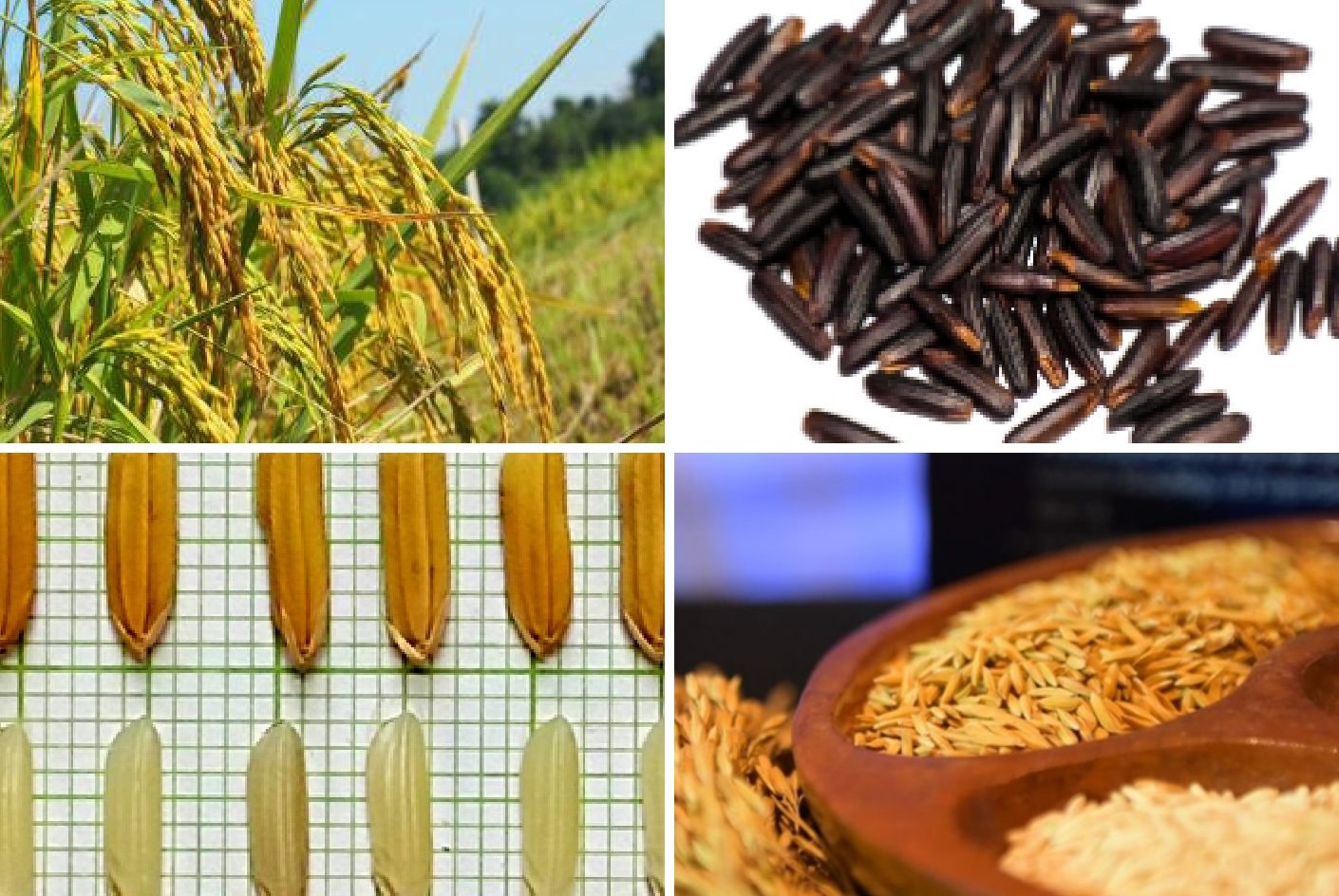
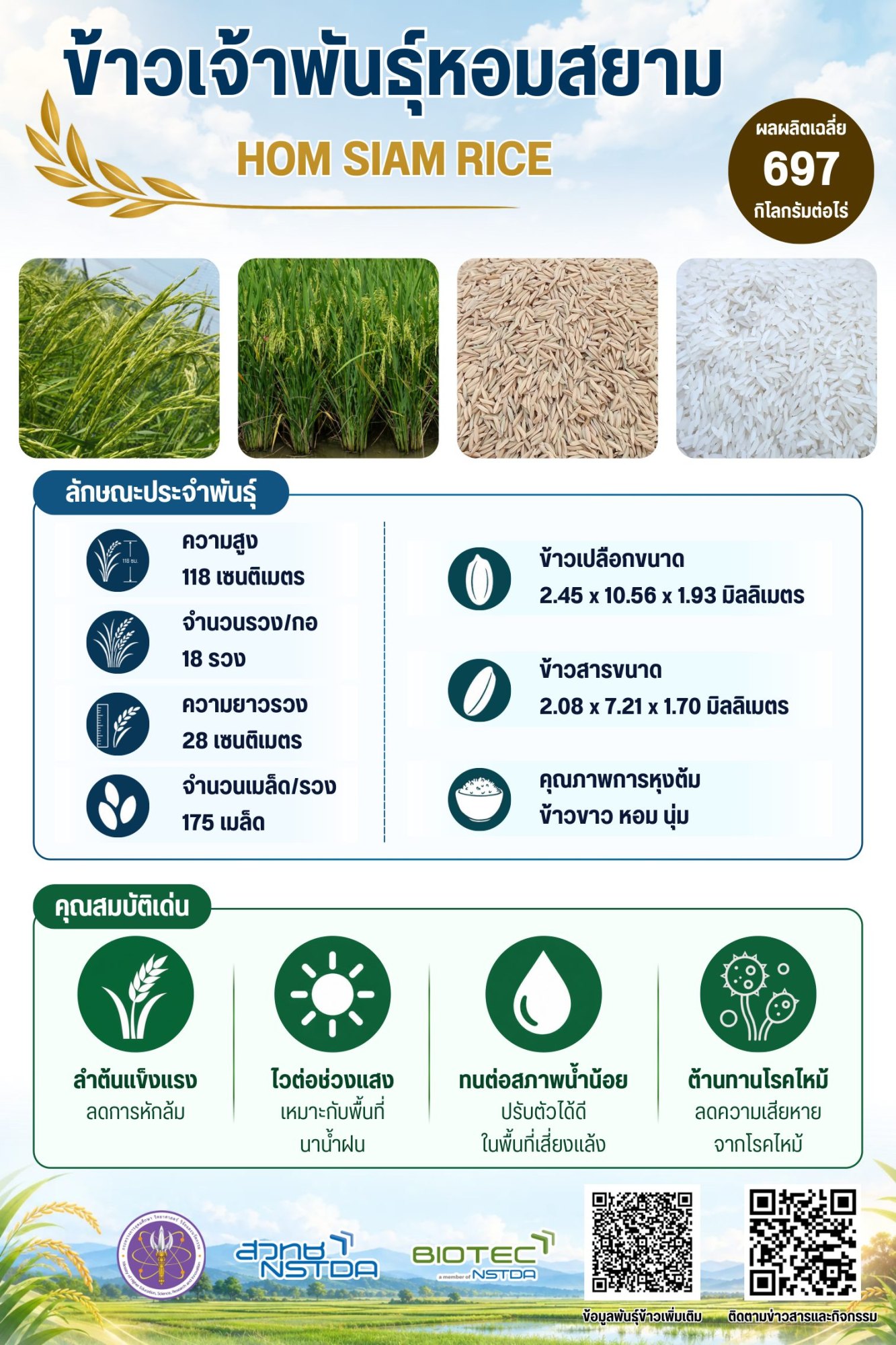
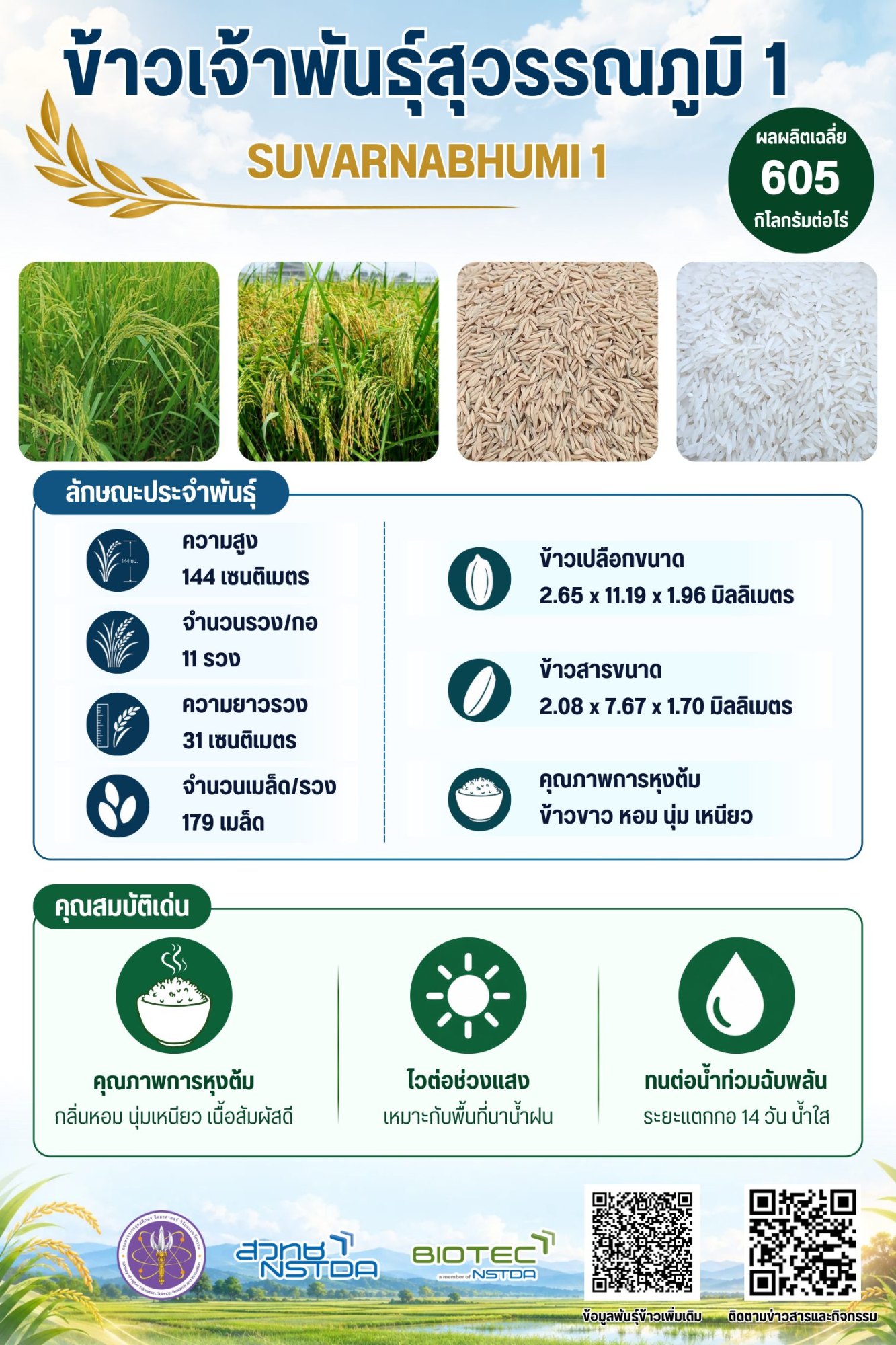
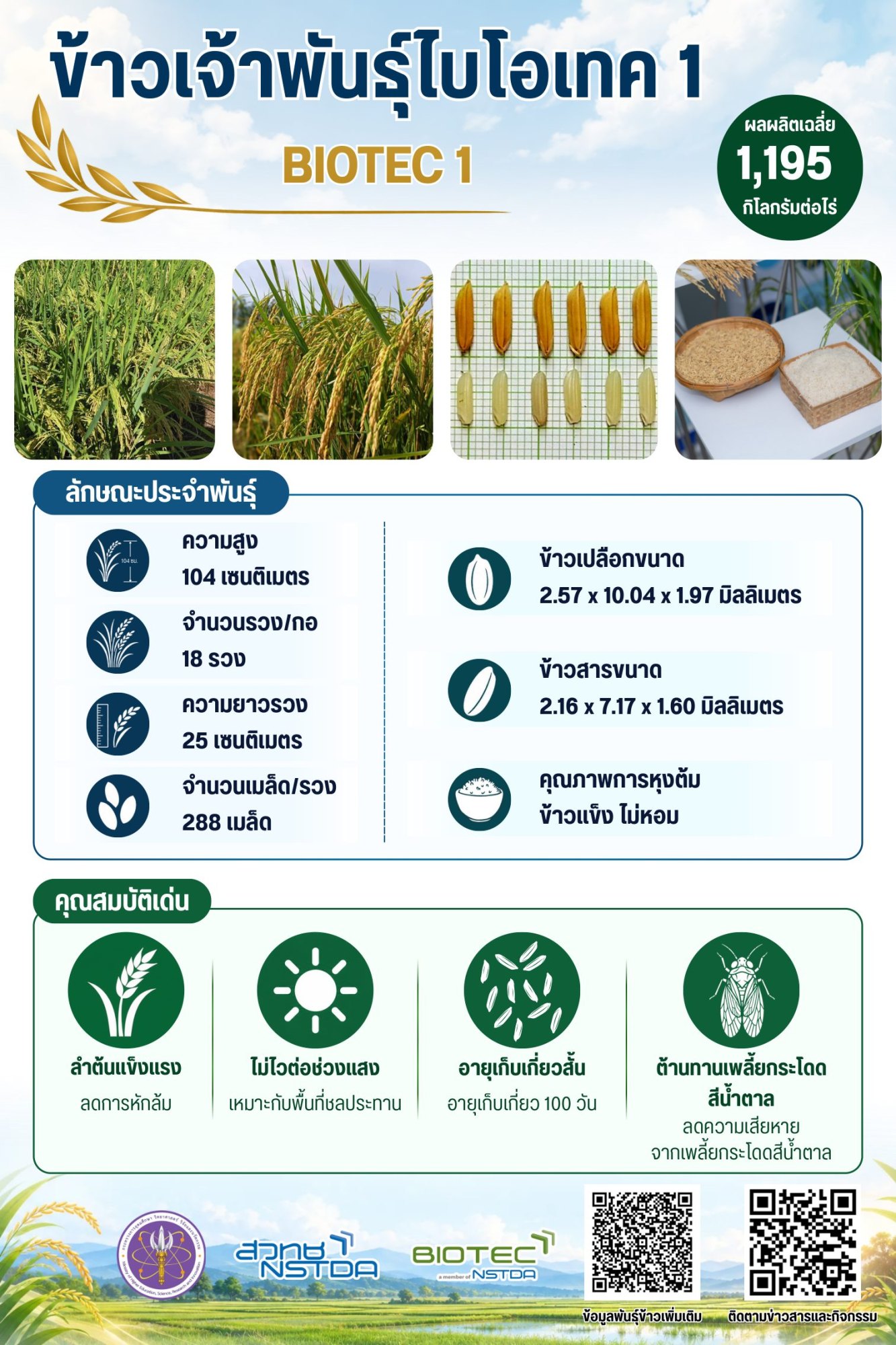
BIOTEC, part of the National Science and Technology Development Agency (NSTDA), presents information on seven rice varieties. Some are photoperiod sensitive and suited to rainfed lowland; others are photoperiod insensitive and suited to irrigated areas. Each has its own strengths, such as tolerance of flash floods or water shortage, or resistance to blast, bacterial leaf blight or brown planthopper.
The exhibit also introduces Alternate Wetting and Drying (AWD), a water management practice that saves water and reduces methane emissions from rice paddies, together with the technology used to monitor and evaluate it in the field.

Benefits of AWD
Less water
Water is used more efficiently.
Less methane
A smaller contribution to global warming.
Lower energy costs
Saves money and energy.
Low-carbon rice
Sustainable farming for the future.
How AWD works
- 1
Wet phase
Flood the field to suit the needs of the rice.
- 2
Dry phase
Let the water level drop from time to time, so the rice spends less time in standing water.
- 3
Re-flood
Bring the water back, alternating wet and dry according to the soil type, the site and the growth stage of the rice.
Monitoring and evaluation technology


Water level sensors track the water in the field continuously, to plan irrigation around what the rice needs. Chambers are used to sample and analyse greenhouse gas emissions, comparing continuous flooding with AWD to study the effects on emissions, growth, yield and grain quality.
The full signs 8



 1
 2
 3
 4
 5
 6
 7
 8
 9
 10
 11