This device has no English text-to-speech voice, so the article may not be read aloud.
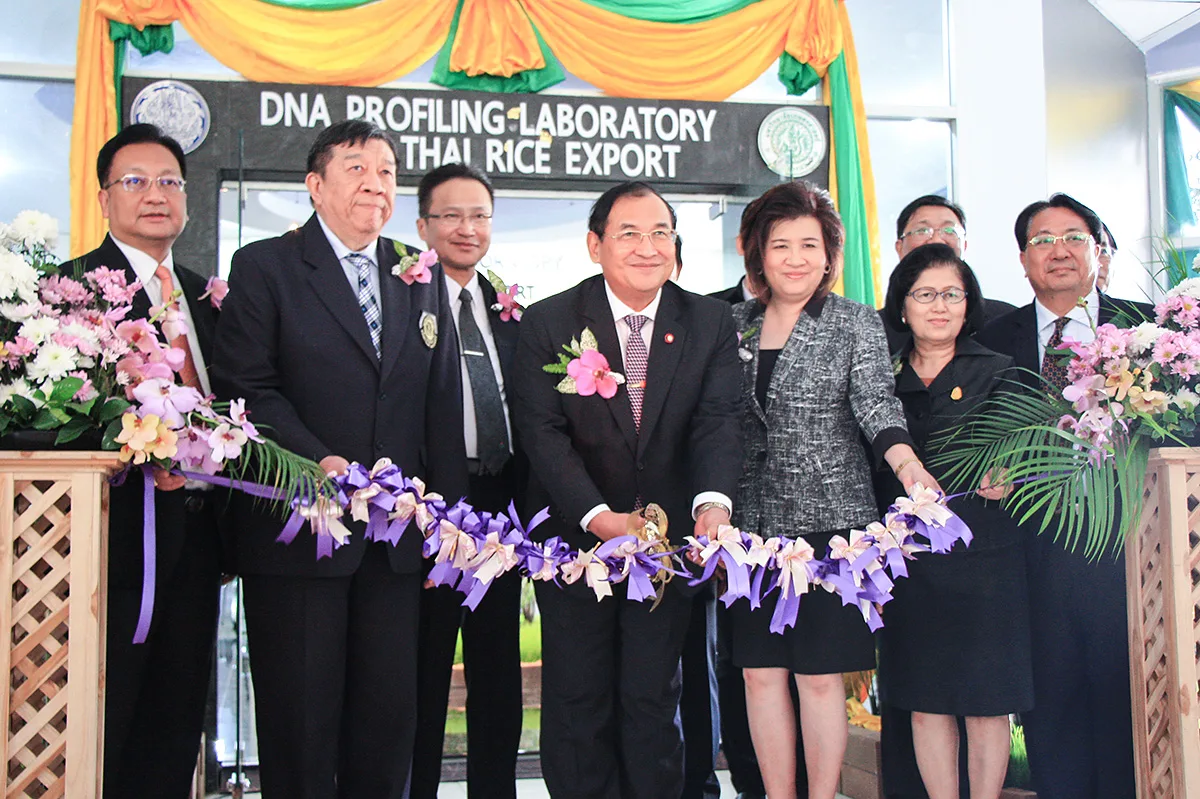
On 13 February 2015, General Pathomphong Prathomphat, Assistant Minister attached to the Ministry of Commerce, representing the Permanent Secretary, graciously presided over the opening ceremony of the DNA Profiling Laboratory for Thai Rice Export and gave a special lecture on “Approaches to Building the Competitiveness of Thai Rice”. Assoc. Prof. Wuthichai Kapilakanchana, President of Kasetsart University, gave the welcome address, and Assoc. Prof. Dr. Apichart Vanavichit, Director of the Rice Science Center, reported on the objectives. Executives, deans, directors, lecturers and researchers also attended the opening of the laboratory. Kasetsart University, through the DNA Technology Unit and the Rice Science Center, has been testing rice quality for the Ministry of Commerce for more than 13 years, with growing credibility and acceptance, testing more than 40,000 samples, and has expertise in DNA profiling of Thai rice and rice from the Mekong countries that may be mixed into Thai rice exports, leading in the future to the development of a National Rice Identity and Quality Standard Verification Center.
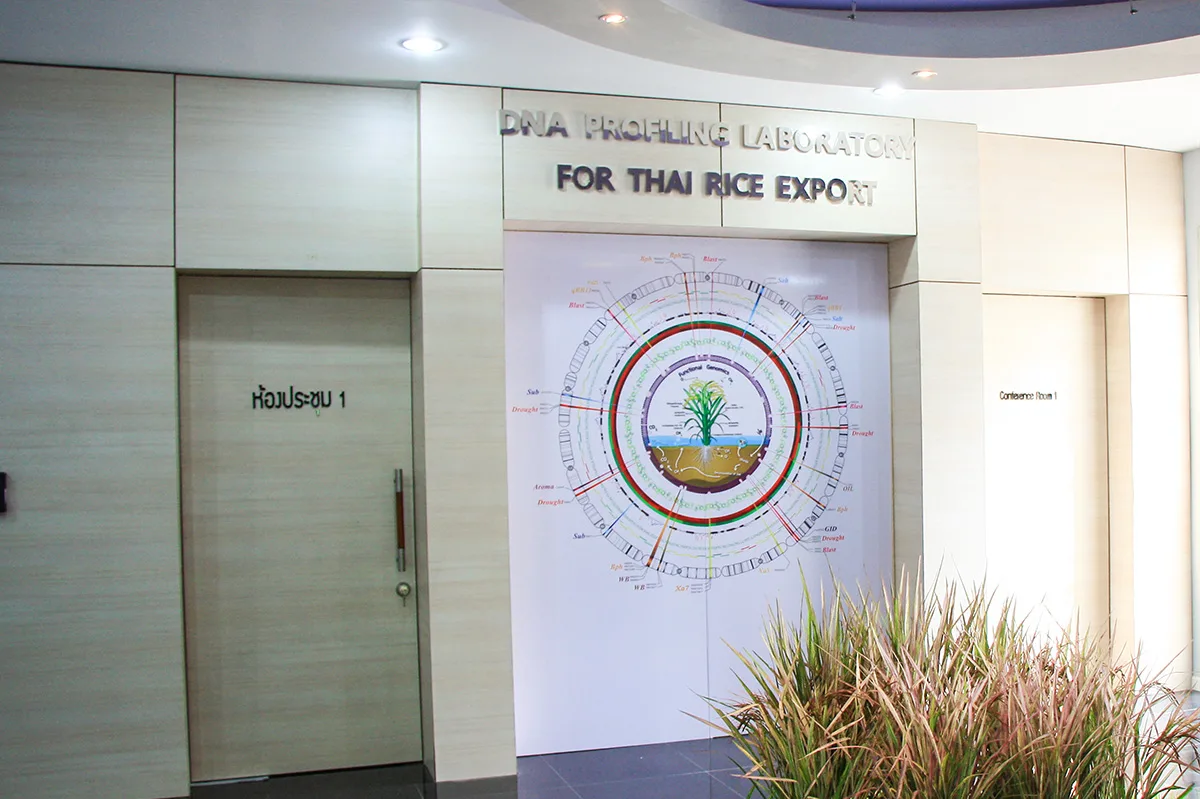
DNA Profiling Laboratory for Thai Rice Export
DNA PROFILING LABORATORY FOR THAI RICE EXPORT

Thai Hom Mali rice is known for its aroma, soft grains and delicious taste, the most sought-after rice by consumers in the world. With more than half of the world's fragrant rice market, Thai Hom Mali rice sells at more than twice the price of ordinary white rice, 100% higher, in the world market, which creates an important problem: adulteration of milled rice. This problem has damaged the image of Thailand's rice trade. Rice adulteration can be intentional or unintentional and can occur at many steps of rice production, from adulteration or contamination of the rice variety before planting, to mixing of paddy grains during harvest or in the milling process. The Ministry of Commerce has therefore set Khao Dawk Mali 105 and RD15 as the standard products of Thai Hom Mali rice, which must have a variety purity of not less than 92%.

To have a laboratory able to provide rice variety purity testing by DNA profiling for the Bureau of Commodity Standards, Department of Foreign Trade, specifically as a reference laboratory, Kasetsart University established the “ Specialized Laboratory for DNA Profiling of Thai Rice for Export”, using KASP SNPline super high-throughput technology to verify variety purity and to trace fragrant rice from neighboring countries that may be competitors of jasmine rice, operating as a “project under the cooperation of the Department of ForeignTrade and Kasetsart University”.